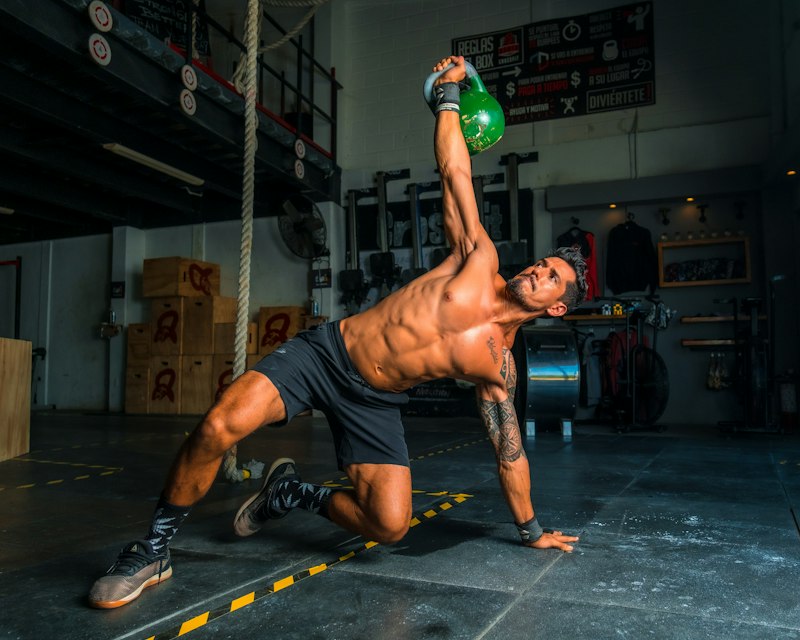
What the Core Actually Is
The "core" is not just the rectus abdominis (the six-pack muscle). It's a 360-degree system of muscles that work together to stabilize the spine and transfer force between the upper and lower body. This includes:
- Deep stabilizers: Transverse abdominis (TVA), multifidus, pelvic floor, diaphragm
- Intermediate layer: Internal and external obliques
- Superficial movers: Rectus abdominis, erector spinae
The deep stabilizers, particularly the TVA, fire before any limb movement to pre-brace the spine. If this system is weak or poorly coordinated, every movement becomes less efficient and more injury-prone.
Why Crunches Don't Build a Functional Core
Crunches train spinal flexion in a range of motion that rarely occurs in real movement patterns. Dr. Stuart McGill, the world's leading spine biomechanics researcher at the University of Waterloo, found that repeated spinal flexion under load significantly increases disc herniation risk.
The spine doesn't need to move to build a strong core. In fact, the core's primary job is often to prevent movement, not produce it.
This is the concept of anti-movement training: training the core to resist flexion, extension, and rotation rather than create these movements.
The McGill Big 3: The Research-Backed Foundation
Dr. McGill's decades of research on spinal health led to three exercises that build core stability without spinal stress. These are ideal as a foundation for anyone, beginner or advanced.
1. The Modified Curl-Up
Unlike the crunch, the modified curl-up keeps the lumbar spine neutral. One knee is bent, hands flat under the lower back to preserve the natural curve. Only the head and shoulders lift slightly. This trains the rectus abdominis and TVA without disc compression.
Start with: 3 sets of 8–10 reps, 1-second hold at top
2. The Bird-Dog
From a quadruped position, extend the opposite arm and leg simultaneously while maintaining a perfectly flat back. This is one of the most effective exercises for training the deep spinal stabilizers (multifidus) and building the reflexive bracing pattern.
Start with: 3 sets of 8 per side, 5-second hold per rep
3. The Side Plank
The side plank is an anti-lateral-flexion exercise, it trains the core to resist sideways bending. It preferentially activates the quadratus lumborum and obliques without lumbar compression.
Start with: 3 sets × 20–30 seconds each side
Building Beyond the Big 3
Once you've established the foundation with the Big 3, progress to more dynamic anti-movement exercises:
- Pallof press: Anti-rotation exercise using a cable or band. Excellent for oblique strength and spinal stability during rotation.
- Dead bug: Supine, opposite arm-leg extensions. Trains deep core coordination under load.
- Farmer's carry: Walking with heavy loads in one or both hands. Trains the entire core system under functional stress.
- Ab wheel rollout: Advanced anti-extension exercise. Only progress to this once the Big 3 are mastered.
How Core Strength Improves Your Lifts
A strong, well-coordinated core directly improves performance in all lower body compound lifts:
- In squats: bracing the core (valsalva maneuver) increases spinal rigidity and allows heavier loads
- In deadlifts: TVA activation before the pull protects the lumbar spine
- In hip thrusts: pelvic stability allows maximum glute force production
The core is not an accessory, it's the foundation. Neglect it and you limit every other lift.
Recommended Weekly Structure
- 2–3 core sessions per week, ideally as warm-up before lower body training
- Keep sessions short: 10–15 minutes is enough for significant development
- Prioritize quality over quantity, 5 perfect bird-dogs are worth more than 20 sloppy ones
Sources & Further Reading
- McGill, S.M. (2007). Low Back Disorders: Evidence-Based Prevention and Rehabilitation. Human Kinetics. BackFitPro.com
- Vera-Garcia, F.J., et al. (2006). Effects of abdominal stabilization maneuvers on the control of spine motion and stability against sudden trunk perturbations. Journal of Electromyography and Kinesiology. PubMed
- Schoenfeld, B.J., & Kolber, M.J. (2016). Abdominal Crunches Are/Are Not a Safe and Effective Exercise. Strength and Conditioning Journal. NSCA
