You are training consistently, your sessions feel hard, and your plan looks solid on paper. Still, your glutes look and perform the same week after week. This is the exact point where many women either overtrain or quit.
A plateau is not random bad luck. It is a signal. Usually one or two variables are drifting outside the productive range, and progress slows before it stops. The fix is not motivation. The fix is a short diagnostic sprint with clear decisions.
This 7-day protocol gives you that sprint. You will audit execution, recovery, nutrition, and programming in a practical sequence. At the end of one week, you will know what is blocking progress and what to change in the next month.
Why Lower Body Plateaus Happen
Most lower body plateaus come from a mismatch between stimulus and adaptation. In simple terms, your training stress is either too small to force new adaptation, or too noisy to recover from. Both patterns look like hard work, but both produce flat results.
The most common causes are stable loads for too long, technical drift on key lifts, poor exercise selection for your structure, sleep debt, and underfeeding relative to training demand. Each factor alone can slow gains. Combined, they can freeze progress completely.
Research on hypertrophy consistently highlights progressive overload, adequate volume, and recovery quality as primary drivers of adaptation. When one pillar collapses, outcomes drop even if attendance stays high. That is why this protocol starts with measurement, not guesswork.
A plateau is rarely one dramatic mistake. It is usually ten small misses repeated for several weeks.
The 7-Day Reset Overview
The protocol is intentionally short. A week is long enough to collect useful data and short enough to keep compliance high. The sequence moves from high-impact checks to low-effort refinements, so you get quick wins without creating more fatigue.
Day 1 establishes baseline numbers. Day 2 fixes technical leakage. Day 3 addresses recovery constraints. Day 4 rebuilds overload targets. Day 5 adjusts exercise menu. Day 6 calibrates nutrition and hydration. Day 7 retests and sets the next 4-week microcycle.
- Goal of the week: identify bottlenecks, not hit personal records.
- Data you will track: load, reps, RPE, sleep, daily steps, and soreness distribution.
- Outcome target: one clear programming change and one clear recovery change for the next block.
Day 1: Baseline Audit in 45 Minutes
Pick two anchor lifts that represent your lower body plan. For most women, that is a hip-dominant pattern like barbell hip thrust and a hinge pattern like Romanian deadlift. If your program is home-based, use dumbbell hip thrust and split squat as anchors.
For each anchor lift, perform one top set in a stable rep range, usually 6 to 10 reps, and two back-off sets. Record the exact load, completed reps, and RPE. Keep form strict. If form breaks, the set is not valid as baseline data.
Then review the previous 4 weeks. If load and reps are almost unchanged, progression has flattened. If RPE has increased while performance is flat, fatigue is accumulating faster than adaptation. Both patterns require immediate adjustment.
- Audit checklist: stance consistency, depth consistency, tempo consistency, and lockout quality.
- Flag for concern: repeated sessions with RPE 9 to 10 and no performance improvement.
- Immediate action: reduce novelty and standardize setup cues before adding more volume.
Day 2: Technique and Tempo Reset
Technical leakage is a hidden plateau driver because the session still feels hard. You work, but target tissue tension drops as compensations rise. On glute-focused lifts, common leakage points are lumbar extension at lockout, short range of motion, and loss of pelvic control.
Use a controlled tempo for one session: 3 seconds eccentric, 1 second pause in stretched position where safe, and aggressive concentric intent. This raises effective tension without immediately increasing external load, which is useful during diagnostic weeks.
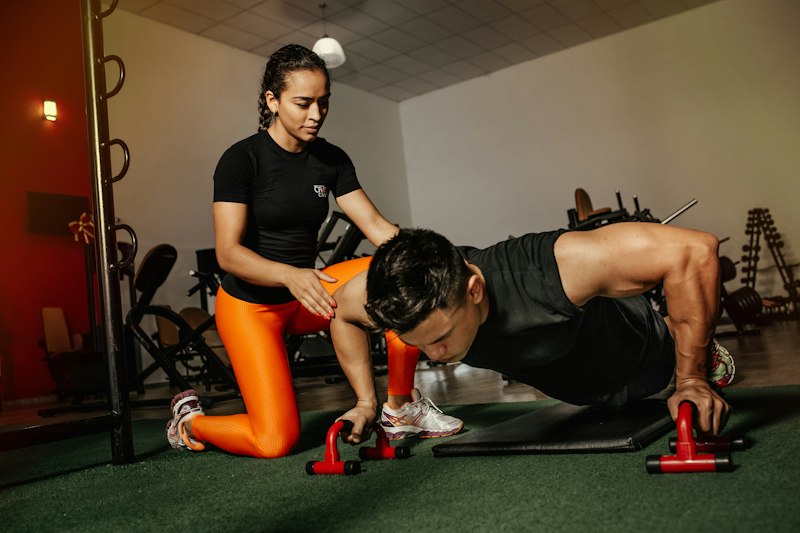
Film one side angle and one rear angle for hip thrust and split squat patterns. Compare first and last reps. If the last reps change path or depth, your load may be above current technical capacity. In that case, reduce load by 5 to 10 percent and rebuild.
- Primary cue for hip thrust: rib cage down, pelvis neutral, drive through full foot.
- Primary cue for split squat: stable tripod foot, vertical shin target if glute bias is intended.
- Primary cue for hinge: hips back, soft knees, constant torso brace.
Day 3: Recovery Inputs That Decide Adaptation
Recovery is not a passive concept. It is a set of measurable inputs. Start with sleep duration and sleep regularity. If your sleep window is changing by more than 90 minutes across nights, recovery quality drops even if total weekly hours look acceptable.
Next, examine daily movement outside training. Very low movement can reduce circulation and tissue readiness. Very high movement can create hidden fatigue, especially in calorie deficits. For most women in active training blocks, a moderate and stable step range is more productive than extremes.
Finally, evaluate soreness distribution. Mild local soreness after a new stimulus is normal. Persistent deep fatigue, reduced motivation, and stagnant loads across multiple lifts suggest systemic under-recovery. In that case, a brief deload or volume trim restores adaptation capacity.
- Sleep target: 7.5 to 9 hours with consistent bedtime and wake time.
- Step target: keep daily movement stable rather than spiking on random days.
- Deload trigger: two weeks of flat performance plus elevated perceived fatigue.
Day 4: Rebuild Progressive Overload Rules
Many plateaus are not training failures. They are progression-rule failures. If your plan does not specify when to add load, reps, or sets, decisions become emotional and inconsistent. This protocol replaces vague effort with explicit thresholds.
Use double progression on primary lifts. Example: target 3 sets in the 6 to 10 rep range. Keep load fixed until all sets hit the top of the range with acceptable form and RPE. Then increase load by the smallest practical increment and repeat.
For secondary lifts, progress by reps first, then load. For isolation work, progress by improved control and shorter rest before chasing heavier resistance. This keeps joints happier while preserving muscular tension where you need it.
- Primary lifts: load progression after top-range completion.
- Secondary lifts: rep progression before load increase.
- Isolation lifts: tension quality and control progression.
Day 5: Exercise Selection Surgery
Do not keep exercises that consistently miss the target tissue. If a movement repeatedly shifts stress to lower back or quads when you want glutes, modify stance, setup, or variation. If correction fails after two to three sessions, replace the exercise.
A strong lower body week should include one heavy hip-dominant pattern, one hinge pattern, one unilateral pattern, and one abduction or extension isolation pattern. This creates broad stimulus coverage without random exercise inflation.
Keep total weekly hard sets realistic. More is not always better. Volume that exceeds your recovery ceiling reduces output quality, which lowers effective stimulus per set. Productive plans are dense and repeatable, not maximal every session.
- Keep: exercises that produce stable form and clear target-muscle output.
- Modify: exercises with partial mismatch that improves with setup changes.
- Replace: exercises that keep missing target output after repeated technical fixes.
Day 6: Nutrition and Hydration Calibration
Lower body hypertrophy is expensive in energy terms. If intake is too low, performance and recovery signal this first, usually as weaker top sets and poor session quality. Start by checking protein consistency and overall energy intake relative to goals.
For muscle gain phases, small surpluses are usually more productive than aggressive surpluses. For recomposition phases, maintenance to slight deficit can work, but only if protein is high and progression remains measurable. Your weekly performance trend is the key feedback metric.
Hydration and sodium also influence training quality. Poor hydration reduces force output and session tolerance. Women with high sweat rates or hot training environments often need deliberate fluid and electrolyte plans, not ad hoc water intake.
- Protein target: 1.6 to 2.2 g per kg bodyweight daily.
- Pre-training meal: protein plus carbohydrates 60 to 120 minutes before lifting.
- Hydration target: begin sessions hydrated and replace fluid losses after training.
Day 7: Retest and Build the Next 4 Weeks
Repeat the Day 1 anchor-lift format under similar conditions. Compare load, reps, and RPE quality. One week is not enough for dramatic tissue change, but it is enough to detect cleaner execution, better readiness, and clearer progression pathways.
Now build a 4-week microcycle with fixed rules. Week 1 and 2 emphasize execution and stable progression. Week 3 pushes output with conservative load increases. Week 4 trims fatigue with lower volume while keeping intensity specific.
Define success in advance: improved top-set performance, lower RPE at matched loads, and more predictable recovery between sessions. If these markers improve, your plateau is already breaking, even before visual changes become obvious.
The women who exit plateaus fastest are not the women who train hardest for one day. They are the women who measure, adjust, and repeat for four consistent weeks.
Sources & Further Reading
- Schoenfeld, B.J. (2010). The mechanisms of muscle hypertrophy and their application to resistance training. Journal of Strength and Conditioning Research. PubMed
- Grgic, J. et al. (2022). Effects of resistance training performed to repetition failure or non-failure on muscular strength and hypertrophy. Journal of Sport and Health Science. PubMed
- Simpson, N.S. et al. (2017). Sleep and exercise performance in women and men: a systematic review. Sports Medicine. PubMed
- Morton, R.W. et al. (2018). Protein supplementation and resistance training induced gains in muscle mass and strength. British Journal of Sports Medicine. PubMed